
Wang Dan (dissident)
Chinese dissident and scholar exiled after Tiananmen Square protests.

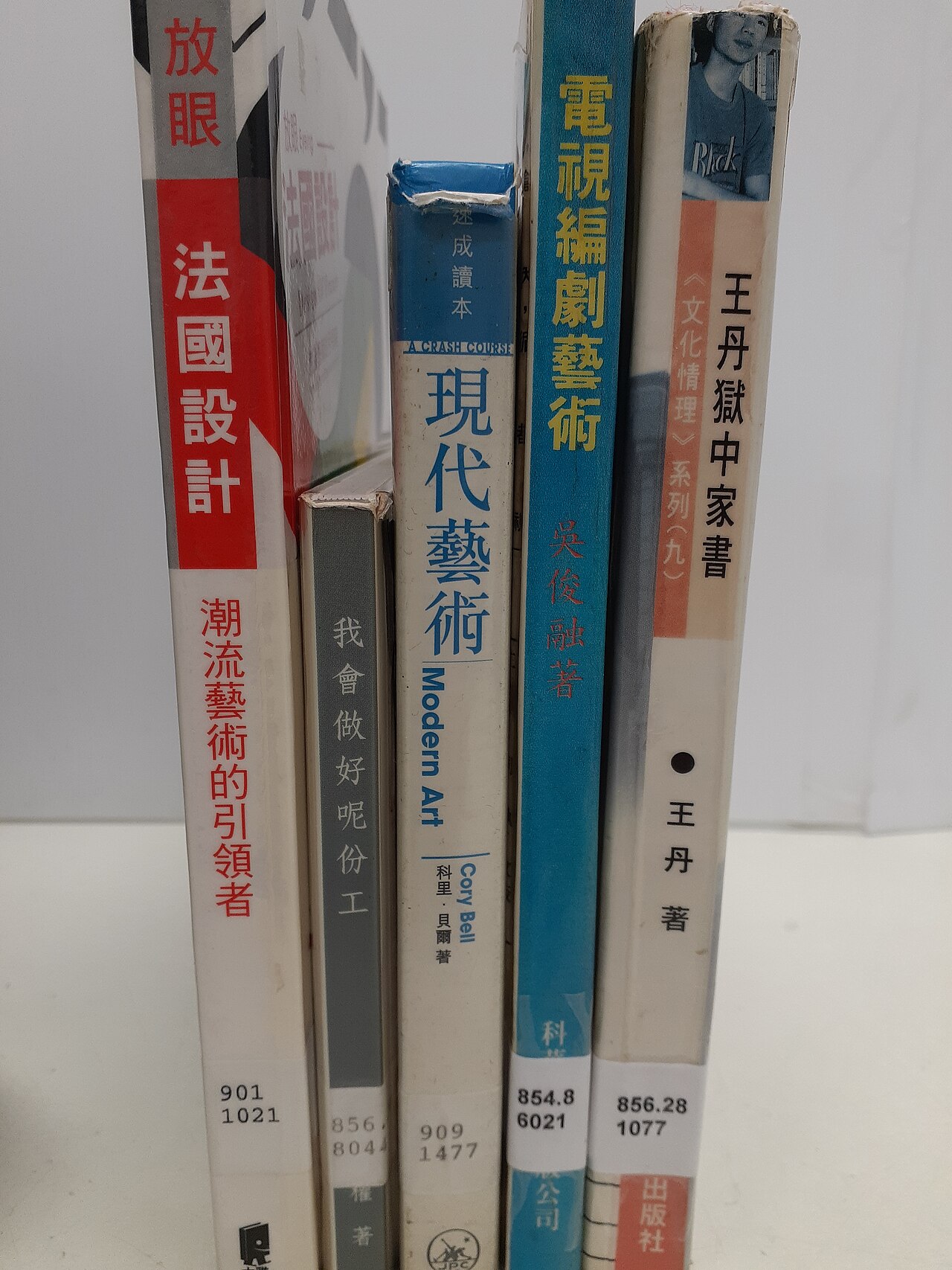
AahseemlAU 300 · CC BY-SA 4.0
Wang Dan (born 26 February 1969, though widely accepted as 26 February 1966) is a Chinese political activist and history scholar. He rose to prominence while studying at Peking University as one of the student leaders in the Tiananmen Square protests of 1989, after which he was twice jailed by the Chinese government. He went into exile in the United States in 1998 and, after earning a master's degree from Harvard University and later studying at the University of Wisconsin–Madison (though he did not receive a PhD there), divided his time between Taiwan, where he taught at several universities, and the United States.
- born
- 26 February 1969 (widely accepted as 26 February 1966)
Lore & Background
Wang Dan was born in 1969 (widely accepted as 1966) and was a politically active student at Peking University's history department, organizing 'Democracy Salons.' He participated in the student movement that led to the 1989 protests, joining the movement's organizing body as the representative from Peking University. After the crackdown, he became the 'most wanted' on a list of 21 fugitives, was arrested on 2 July 1989, and sentenced to four years imprisonment in 1991. Released on parole in 1993, he continued writing to publications outside mainland China and was re-arrested in 1995 for conspiring to overthrow the Chinese Communist Party, receiving an 11-year sentence in 1996. He was released early in 1998 and exiled to the United States. In the United States, Wang resumed his studies at Harvard University, completing a master's in East Asian history in 2001. He later studied at the University of Wisconsin–Madison but did not receive a PhD there. He became chairman of the Chinese Constitutional Reform Association and taught PRC history at several Taiwanese universities. In 2014, he wrote on Facebook that he suspected having a brain tumor and requested the Taiwanese government to let him go to Taiwan.
Reader's Guide
Wang Dan's significance lies in his role as a prominent student leader during the 1989 Tiananmen Square protests and his subsequent life as an exiled political activist. His two imprisonments and eventual release to the United States, reportedly following an agreement between the US and China, highlight the international dimensions of his case. After earning a PhD from Harvard, he continued activism through writing, teaching in Taiwan, and chairing the Chinese Constitutional Reform Association. His legacy is complicated by later controversies, including allegations of sexual misconduct and disputed payments from the Chen Shui-bian administration. Wang's story illustrates the long-term trajectories of Chinese dissidents and the ongoing tensions between China's government and exiled activists.
Did You Know?
- Wang Dan was placed on a list of the 21 most wanted student leaders after the 1989 protests.
- He was released from his second prison sentence in 1998 and sent immediately to the United States.
- Wang earned a master's from Harvard University and studied at the University of Wisconsin–Madison, but did not receive a PhD there.
Origins and the Consolidation of One-Party Rule
The White Terror in Taiwan traces its roots to the KMT's desperate flight from mainland China at the close of the Chinese Civil War in 1949. Two years after the traumatic 28 February incident on the island, the party-state regrouped in Taiwan and moved swiftly to lock down its remaining territory. On 19 May 1949, martial law was declared, backed by the 1948 Temporary Provisions against the Communist Rebellion, which granted sweeping emergency powers. The regime's immediate priority was consolidation: suspected leftists, individuals perceived as sympathetic to communism, and Taiwanese locals or indigenous peoples connected to the 28 February uprising were all swept into a campaign of execution and imprisonment. The government framed every act of criticism as an attempt to subvert the state, dramatically broadening the net of who could be punished. This foundational period set the template for decades of authoritarian control, establishing the legal and coercive infrastructure that would define life under KMT rule for the next four decades.
The Machinery of Control: Law, Surveillance, and Society
Beyond raw violence, the KMT built an elaborate apparatus of legal and social control. Under martial law, charges of overthrowing the government or threatening state stability carried long prison sentences, and military courts streamlined the process of punishing opponents. The 1979 Kaohsiung Eight case illustrated this mechanism: leaders of a protest triggered by the arrest of sixty citizens linked to the opposition Formosa Magazine were hauled before military tribunals and handed sentences ranging from twelve years to life. The Taiwan Garrison Command functioned as a secret police force, conducting pervasive surveillance and filing fabricated criminal cases against anyone suspected of dissent. The sedition law, not repealed until 1992, mandated minimum seven-year sentences for political opponents. The regime also reshaped society through land redistribution beginning in 1949, which weakened local landowners and extended state authority into rural areas, and through school curricula that embedded pro-government ideology, military training, and a promoted Chinese identity into daily education. Together, these strategies sustained KMT dominance for roughly fifty years.
The Human Toll: Victims, Executions, and Arbitrary Justice
The human cost of the White Terror was staggering. An estimated three to four thousand civilians were executed by the KMT government, and the regime was also suspected of carrying out extrajudicial killings against political exiles abroad. Most prosecutions concentrated in the first two decades, when the party-state was most determined to eliminate perceived threats. Victims were routinely branded as communist agents, often without any credible evidence. Chiang Kai-shek reportedly declared a willingness to kill a thousand innocents rather than let a single communist escape. The targets included Taiwanese intellectuals, social elites, and independence activists such as members of the Formosan League for Reemancipation, arrested in 1950, and the World United Formosans for Independence. Yet the persecution was not limited to clear political opponents: in 1968, Bo Yang was imprisoned simply for his word choices in translating a Popeye comic. Future president Lee Teng-hui was detained and interrogated for over a week in 1969, told that killing him was as easy as crushing an ant. Many victims were mainland Chinese who had fled to Taiwan alongside the KMT itself.
The Long Unwinding: From Martial Law to Democratic Reform
The era of repression did not end overnight. Martial law, which had lasted thirty-eight years and fifty-seven days—the longest such period in the world at the time and now the second longest after Syria's forty-eight-year stretch—was finally lifted on 15 July 1987, following the Lieyu Massacre. Yet legal mechanisms of persecution lingered: the 1948 Temporary Provisions were repealed on 22 April 1991, and it was not until 21 September 1992 that Article 100 of the Criminal Code, which enabled prosecution for anti-state activities, was struck down. A deep cultural fear of openly discussing the White Terror and the 28 February Incident persisted well into the post-martial-law era. Paradoxically, some of the regime's own victims became architects of Taiwan's democratic transformation. Bo Yang, Lei Chen, and Li Ao, all once imprisoned, went on to champion democratization and internal KMT reform. Lee Teng-hui, who had been a terrified detainee in 1969, was invited into Chiang Ching-kuo's cabinet three years later and eventually rose to the presidency, embodying the island's dramatic political metamorphosis.
Gallery


Frequently Asked Questions
Who is Wang Dan (dissident)?
Wang Dan is a Chinese political activist and history scholar best known for his role as a student leader during the 1989 Tiananmen Square protests. Born on 26 February 1966 (though some records list 1969), he was a student at Peking University when he gained international recognition.
What was Wang Dan's role in the 1989 protests?
While studying at Peking University, Wang Dan emerged as one of the prominent student leaders organizing and speaking during the Tiananmen Square demonstrations. His visibility as a young, articulate voice made him a symbolic figure for the student movement.
What happened to Wang Dan after the 1989 events?
The Chinese government jailed him twice in the period following the protests. He ultimately left China in 1998, entering exile in the United States to continue his academic and activist work.
Where did Wang Dan study and teach after going into exile?
In the U.S. he earned a master's degree at Harvard University and later pursued studies at the University of Wisconsin–Madison, though he did not complete a doctorate there. He also spent time teaching at several universities in Taiwan, splitting his career between the two regions.
Why is Wang Dan considered important in discussions of Chinese dissent?
He remains one of the most recognizable faces of the 1989 student movement and a long-standing symbol of political opposition to the Chinese state. His decades of exile, imprisonment, and continued scholarly work keep him at the center of conversations about freedom of expression in China.
More in Miscellaneous Activists & Dissidents 1-24
Elsewhere in the Miscellaneous Activists & Dissidents universe
Spotted an error? Know more?
This is a living reference — every entry is fact-audited, and reader corrections feed straight into our audit queue. Suggest an edit · See this site's audit record